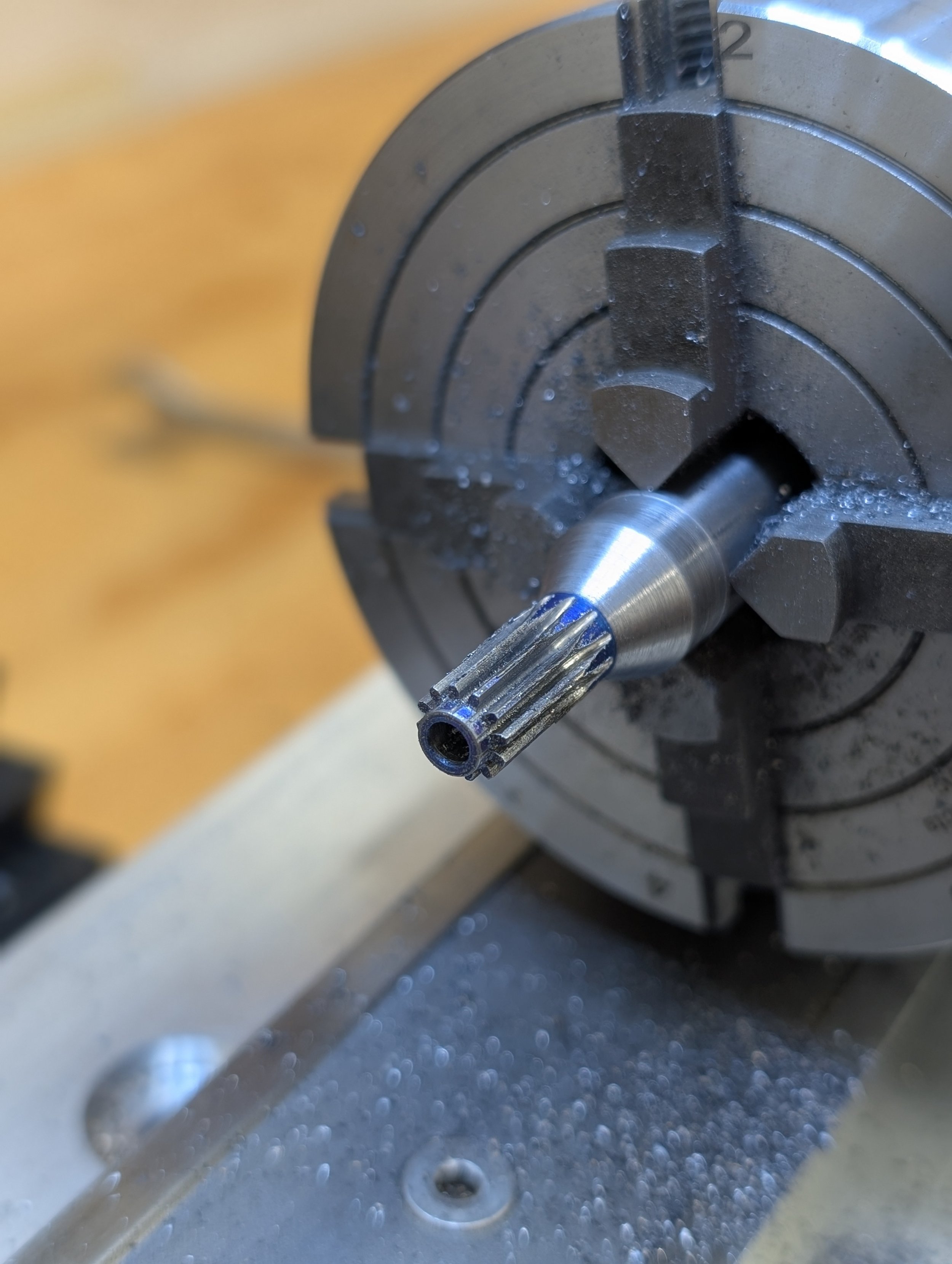
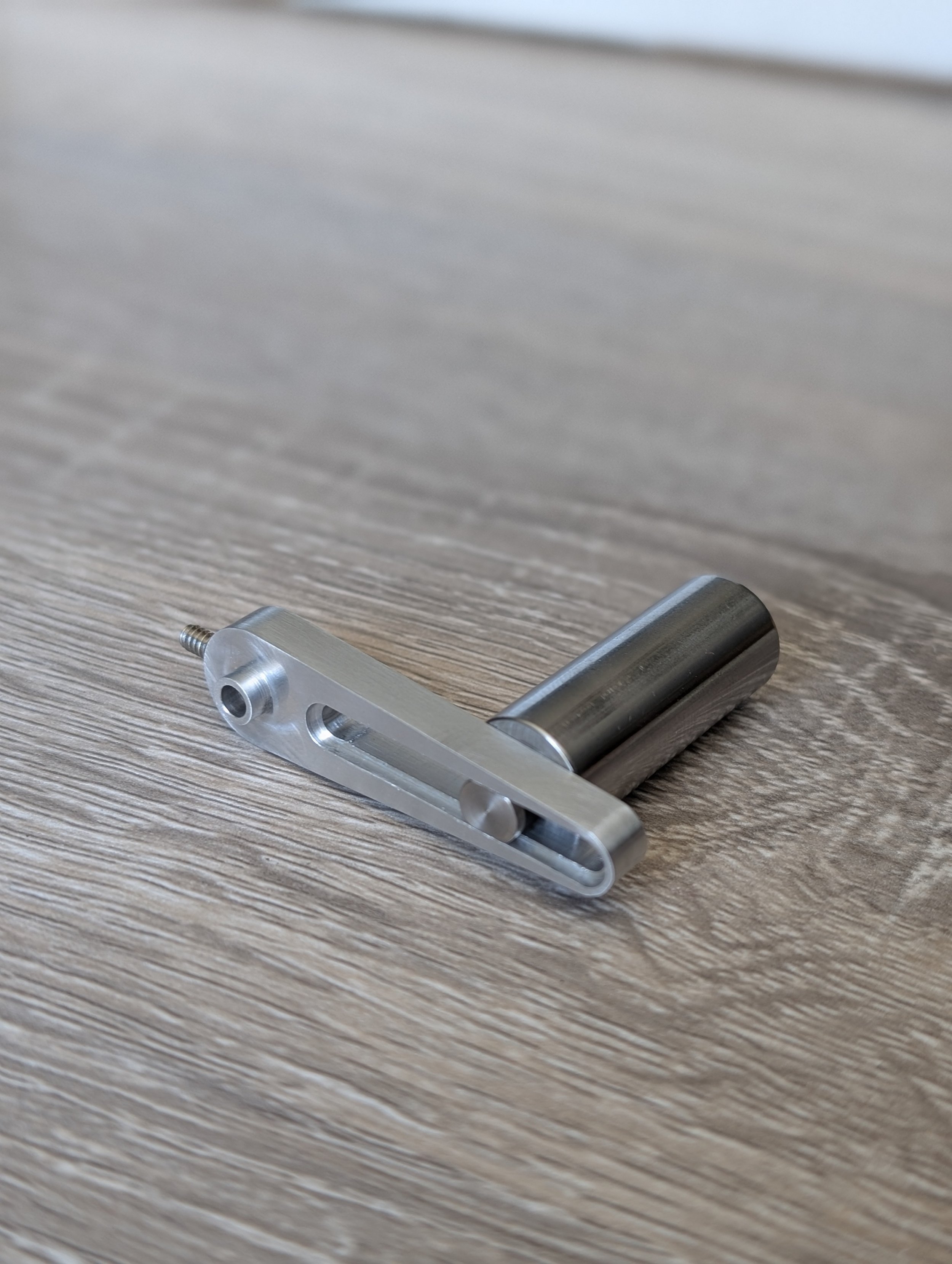
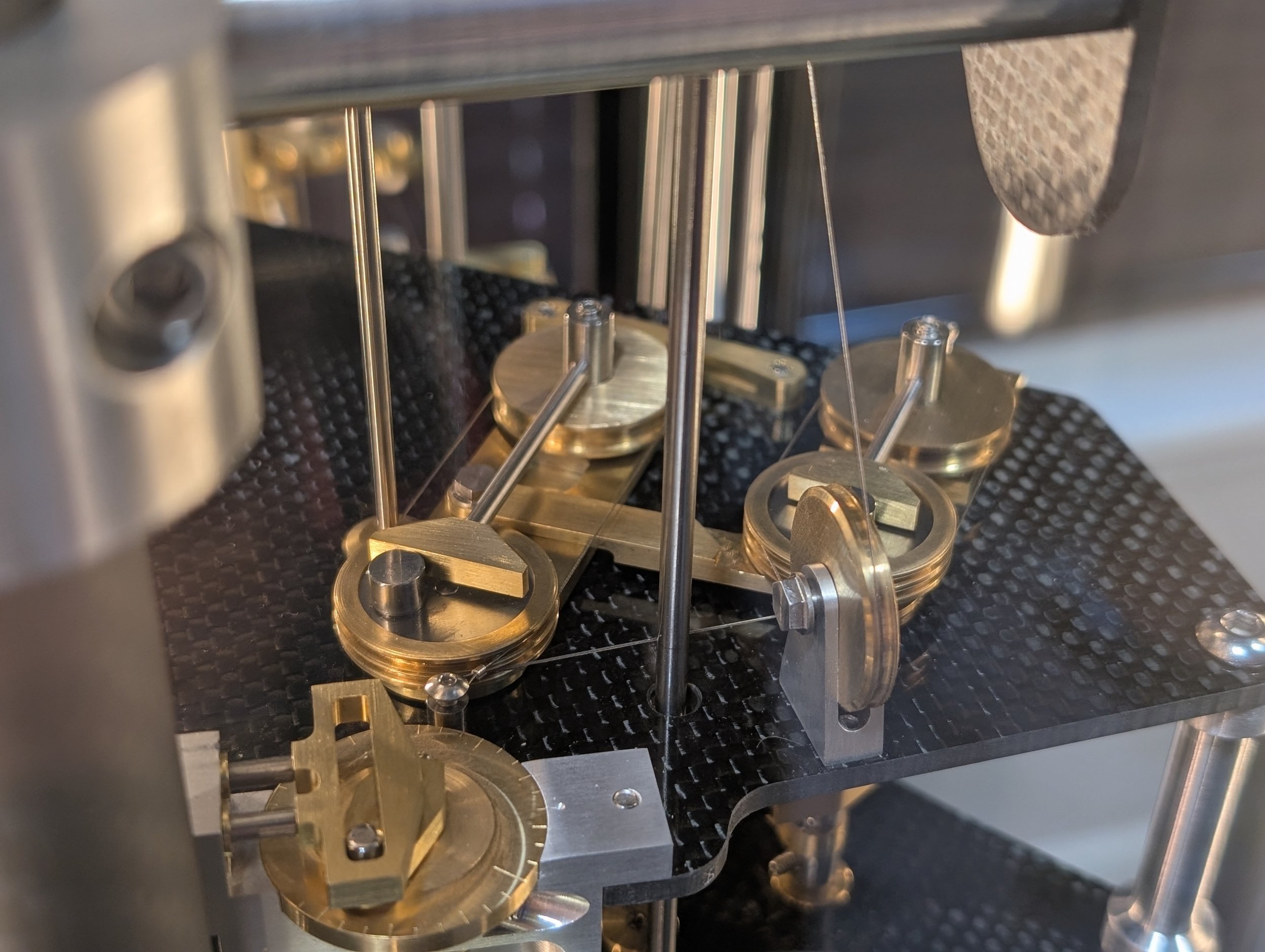
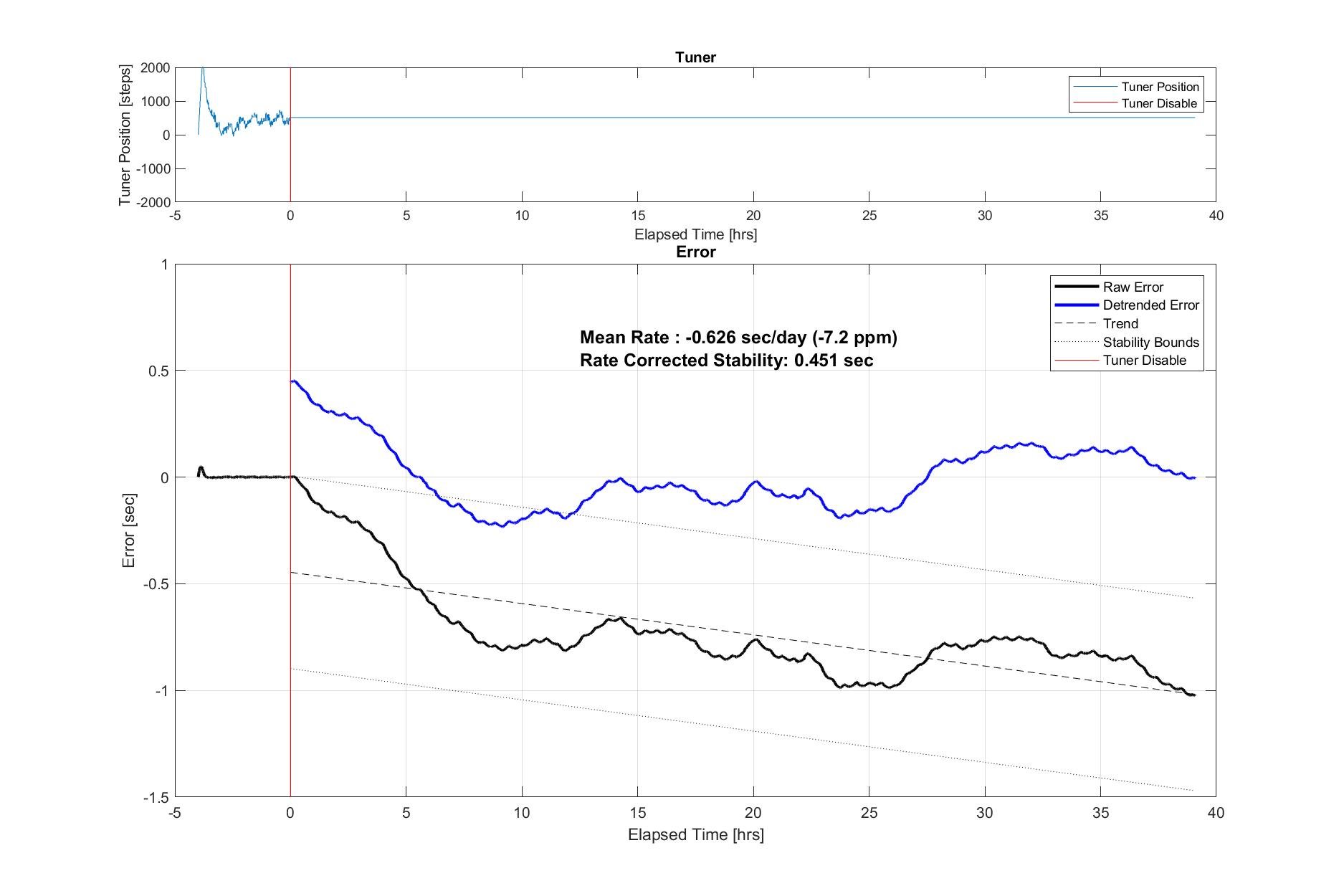
The pinion change has made a substantial difference and the clock is running much more smoothly. There is still perceptible variation in the escapement timing, but it as run for approximately a week. One stall occurred and is still being investigated, suspect depthing adjustment needed on second pinion. I’ve started open-loop testing where the tuner disables itself after initiation to characterize performance of just the mechanical portion of the clock. Mean error appears to be around 0.5-1 second per day, with fluctuations of about 0.5 seconds over that period. This puts it on par with a typical quartz regulator and between Harrison’s precision regulators (~0.05 sec/day) and typical precision clocks of that time (1-10 sec/day). I’m very pleased with this result, and I believe the primary improvement potential to remain as reducing friction to smooth the running. I’ve also made the equation of time counterweight from a bar of tungsten and added all the cables for transmitting signals between modules.